Signal · design
Excavated clay pressed through biscuit moulds becomes wall tile at Old Oak Common
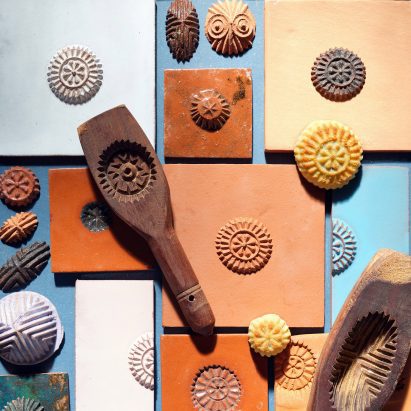
Here is the object: 12 tonnes of London clay, dug out of the ground to make room for a train station, pressed into traditional biscuit moulds, fired, and fixed back onto the walls of that same station. The designers are Bahbak Hashemi-Nezhad and Rafael El Baz. The project is called Sweet Terrain. The station is Old Oak Common. The train line is HS2. The tile is the thing.
This is not a recycled-material story. The word "recycled" flattens what is happening here into a sustainability checkbox, and that checkbox is the least interesting thing about the work. What is happening is a material transfer: clay that has been in the ground for geological time is extracted, shaped using a mould designed for shortbread and ginger nuts, and reinstalled as architectural surface in the same location it came from. The circle is tight. The radius is roughly zero metres.
The 3% edit is the mould. Standard practice for excavated clay on a megaproject is to load it onto lorries, drive it somewhere else, and either landfill it or sell it as fill. The standard practice for architectural tile is to press clay in industrial dies at scale, fire it, and ship it. Hashemi-Nezhad and El Baz shifted one variable: the forming tool. They took a biscuit mould, a domestic object with a specific heritage of replication and repetition, and used it as the die for infrastructure-grade material. That is the minimum shift. The clay is the same clay. The firing is presumably the same firing. The mould is where the meaning changes.
A biscuit mould produces a specific kind of surface. It has relief. It has decorative logic. It carries the imprint of the mould-maker's hand in a way that an industrial die does not. When you press construction clay through a biscuit mould, you are saying something about the relationship between the domestic and the civic. You are saying that the wall of a train station can carry the intimacy of a kitchen object. That is a real proposition. It is not a metaphor. It is a material fact visible in the tile's face.
The anti-reference here is the heritage-brick vanity project. You know the type. A developer digs up some local clay, fires it into bricks that look old, and markets the building as "rooted in place." The bricks are new. The place is a rendering. The connection is decorative. Sweet Terrain refuses that move because the material is genuinely site-specific. It was excavated from the station's own ground. It is going back onto the station's own walls. There is no supply chain story to manufacture because there is no supply chain. The chain is the site.
Everyone in the industry is thinking the same thing and no one with a byline will say it plainly: HS2 is a budget catastrophe, a schedule disaster, and a political wound that will not close. Any material gesture attached to that project will be read by someone as PR laundering. That reading is not wrong, but it is also not complete. The tile does not absolve the project. It does something smaller and more useful. It demonstrates that within the machinery of a megaproject, there is room for a craft decision made by two designers with 12 tonnes of dirt and a shortbread mould. The gesture is modest. The scale of the infrastructure is not. The contrast is the point.
The Field read is narrow. Dezeen is the only outlet covering this, and it is covering it as a design story with a craft orientation. The Field ticks confirm this: the coverage sits on the craft side of the spectacle-craft axis, and the house weight is entirely on the institutional side. No independent or community voices have weighed in. No spectacle-driven outlets have picked it up. This means the story is being read as a making story, not a branding story, which is probably correct but also probably temporary. The moment a wider press cycle catches it, the biscuit-mould detail will become the headline and the material reclamation will become the footnote. That inversion will flatten the work.
The cut-through: they dug up the ground, pressed it through a biscuit mould, and put it back on the wall. The station is made of the station. That is the whole pitch.
1 source
Field
Field